


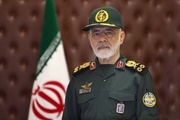
Speaking at a local ceremony on the occasion of eight years of Sacred Defense (Iraqi imposed war against Iran in 1980-1988), Spokesman of Iran’s Defense Ministry Brigadier General Reza Talaeinik stated, “Today marks the anniversary of the outbreak of the first imposed war [Iraqi imposed war against Iran]. Comparing this war with the second [12-day war] and third imposed war [40-day war] can help elucidate for the younger generation the differences in the enemy's patterns, objectives, and methods of confrontation regarding the Islamic Republic of Iran.”
He said that in the recent US-Israeli wars of aggression, new objectives were added to the previous ones, including efforts to weaken the Islamic Republic of Iran’s peaceful nuclear capabilities, missile power, regional power and naval capabilities.
Referring to the common goals of the enemy in the three wars imposed against the country, Brigadier General Talaeinik noted, “One of the main goals of the enemy in all three stages was to overthrow the Islamic Establishment. Another goal was to divide Iran, although the geography of targeting the enemy was different in different periods, but the principle of the goal was followed in all three wars.”
Referring to measures taken to protect the country’s defense capacities, the spokesman said part of the Armed Forces’ strategic capabilities has been relocated in previous years to “secure environments and underground infrastructure.”
He said this measure prevented some of the enemy’s calculations regarding Iran’s defense capabilities and weapons-production capacity from materializing.
The general concluded by stressing the need to simultaneously strengthen defense power and the country’s domestic capacity, saying that the Islamic Republic of Iran needs to increase resilience in various fields in order to maintain deterrence.
Geopolitical objectives and efforts to influence Iran's strategic position in the region, particularly given the importance of energy and the location of the Persian Gulf and the Strait of Hormuz, have been cited as the other common goals of the enemy in these wars, he emphasized.
Stating that the enemy failed to achieve any of its strategic objectives, he noted, "Although the war inflicted costs and damages for the country, the enemy was unable to realize its primary strategic goals and in contrast, the powerful Armed Forces of the country inflicted heavy costs on the enemy."
Elsewhere in his remarks, Talaeinik pointed to the volume and variety of weaponry used by enemy in recent conflicts, adding that the intensity of fire, speed of operations, geographical scope of engagement, types of weaponry, and use of new technologies in recent wars are incomparable to the eight-year war.
Emphasizing the necessity of simultaneously strengthening the country's defense capabilities and domestic capacity, he stated, "To maintain its deterrence, the Islamic Republic of Iran needs to enhance its resilience across various sectors.”
Highlighting the significant differences between the eight-year war and recent imposed wars, the spokesman stated, “Although the enemy entered the battlefield with new objectives and advanced technologies, it failed to achieve any of its strategic goals. Meanwhile, the Islamic Republic of Iran, relying on faith, indigenous defense capabilities, and technological prowess, emerged victorious from this test.”
MA/6958810







Your Comment